
The Canadian Securities Exchange is a cesspool of fraud and corruption run by Crooked Cop Mark Faulkner and his sleazy friends: Richard Carleton, Tracey Stern, Rob Cook and Rob Theriault.
These scumbags have committed multiple acts of fraud that have damaged thousands of investors.
The question is why Canadian regulators, OSC, and BCSC have done nothing about removing these executives who are clearly UNSUITABLE?

Attached is a formal request sent to the OSC and BCSC to review the “Fitness and Suitability” of corrupt Canadian Securities Exchange officials: Mark Faulkner Richard Carleton, Tracey Stern, Rob Cook and Rob Theriault.
Formal Request for Review of Fitness and Suitability of Canadian Securities Exchange Officials Under Recognition Order Conditions
Date: March 19, 2026
I. PURPOSE OF THIS SUBMISSION
This submission requests that the British Columbia Securities Commission (BCSC) and the Ontario Securities Commission (OSC) exercise their oversight authority under the Recognition Orders granted to the Canadian Securities Exchange (CSE) to conduct a formal fitness and suitability review of the following CSE officials:
• Mark Faulkner, Vice President, Regulation
• Rob Cook, Regulatory Staff / Panel Member
• Rob Theriault, Vice President, Listings & Regulation
• Tracey Stern, Chief Legal Officer
• Richard Carleton, Chief Executive Officer
Recognition Orders granted by the BCSC and OSC require that exchange officials — including senior executives and individuals exercising regulatory and quasi-judicial functions — be, and remain, “fit and proper” persons. The evidence described herein raises serious and, in several respects, independently documented and legally adjudicated questions as to whether these individuals continue to satisfy that standard.
CSE unsuitable executives for review CSE unsuitable executives for review
TO: British Columbia Securities Commission / Ontario Securities Commission
Compliance & Oversight Division
RE: Formal Request for Review of Fitness and Suitability of Canadian Securities Exchange Officials Under Recognition Order Conditions
Date: March 19, 2026
I. PURPOSE OF THIS SUBMISSION
This submission requests that the British Columbia Securities Commission (BCSC) and the Ontario Securities Commission (OSC) exercise their oversight authority under the Recognition Orders granted to the Canadian Securities Exchange (CSE) to conduct a formal fitness and suitability review of the following CSE officials:
• Mark Faulkner, Vice President, Regulation
• Rob Cook, Regulatory Staff / Panel Member
• Rob Theriault, Vice President, Listings & Regulation
• Tracey Stern, Chief Legal Officer
• Richard Carleton, Chief Executive Officer
Recognition Orders granted by the BCSC and OSC require that exchange officials — including senior executives and individuals exercising regulatory and quasi-judicial functions — be, and remain, “fit and proper” persons. The evidence described herein raises serious and, in several respects, independently documented and legally adjudicated questions as to whether these individuals continue to satisfy that standard.
IMPORTANT NOTE ON EVIDENTIARY FOUNDATION: A substantial portion of the factual record described in this submission is drawn directly from formal written submissions filed on January 30, 2026, by Narwal Litigation LLP (Joven Narwal KC and Joshua Wandler) on behalf of Jack Marks before the Capital Markets Tribunal, in the matter of Jack Marks v. CNSX Markets Inc. and Ontario Securities Commission (File No. 2025-11). Those submissions constitute counsel-verified, sworn-record evidentiary assertions made in active litigation before a recognized adjudicative body. The BCSC and OSC are respectfully requested to obtain and review that record in its entirety as part of any fitness investigation.
II. REGULATORY BASIS FOR REVIEW
As a condition of recognition, the CSE is required to ensure that its officers, directors, and officials responsible for regulatory functions are fit and proper persons. This obligation flows from:
• The BCSC Recognition Order applicable to the CSE
• The OSC Recognition Order applicable to the CSE
• National Instrument 21-101 (Marketplace Operation)
• The general obligation of recognized exchanges to uphold market integrity and investor protection
The fitness and propriety standard encompasses honesty, integrity, competence, sound judgment, relevant qualifications, impartiality, and the absence of conduct — including associations, conflicts of interest, and activities — that would bring the exchange or the capital markets into disrepute.
The Alberta Court of Appeal in McLeod v Alberta Securities Commission, 2006 ABCA 231, established that recognized exchanges, as gatekeepers to the capital markets, owe a “relatively high standard of conduct” and must act fairly in exercising their gatekeeper functions. Where credible evidence calls the fitness of exchange officials into question, the recognizing regulators have both the authority and the obligation to investigate.
III. ALLEGATIONS RELEVANT TO FITNESS AND SUITABILITY
A. Mark Faulkner — Vice President, Regulation
Mark Faulkner is the CSE’s senior regulatory officer. The following matters raise fundamental questions about whether Mr. Faulkner has ever satisfied — let alone continues to satisfy — the fitness standard applicable to this role.
1. Absence of Relevant Qualifications — An Anomaly Without Precedent in North American Exchange Regulation
Mr. Faulkner holds no law degree, no MBA, and no recognized professional qualification in securities regulation, finance, or capital markets. To the complainant’s knowledge and research, he is the only individual currently serving as the head of regulation at a recognized stock exchange anywhere in North America who lacks any such qualification.
Mr. Faulkner’s professional background prior to joining the CSE consists primarily of approximately thirty years as a motorcycle instructor at Humber College. While that career reflects its own expertise, it provides no foundation whatsoever in securities law, regulatory process, administrative fairness, financial markets, or the legal frameworks that govern the exercise of quasi-judicial authority over public companies and market participants.
The role of VP Regulation at a recognized exchange is, in substance, a quasi-judicial one. Its occupant makes binding determinations about the fitness of individuals to participate in public capital markets, imposes trading suspensions affecting thousands of investors, and exercises authority that carries the weight of regulatory sanction. These are functions that, at every other recognized exchange in North America, are entrusted to individuals with legal training, advanced business education, or extensive regulatory experience.
Critically, the pattern of conduct alleged throughout this submission — fabricating regulatory instruments, disregarding due process obligations, failing to notify an affected party of a determination, and participating in decisions while conflicted — is entirely consistent with a fundamental unfamiliarity with the legal and procedural standards that govern regulatory authority. As counsel for Mr. Marks formally submitted to the Capital Markets Tribunal: the CSE’s process was “opaque, unpredictable, and fundamentally unfair” — a characterization that, in the context of Mr. Faulkner’s qualifications, is not merely an indictment of outcome but of institutional capacity.
The BCSC and OSC are respectfully requested to examine whether Mr. Faulkner’s qualifications were ever assessed against the fitness standard applicable to his role.
2. Fabrication of a Regulatory Instrument — Forensic Evidence
The central evidentiary matter in this submission concerns a document titled “Listing Decision / Decision Memo” purportedly dated January 8, 2024, which was used as the basis for declaring Jack Marks an “unsuitable person” and suspending trading in CSE: NEWS.
Counsel for Mr. Marks pulled the metadata of the PDF containing this decision using Adobe Acrobat. The metadata, a screenshot of which is attached as Appendix A to the formal submissions filed before the Capital Markets Tribunal on January 30, 2026, shows that the PDF was created on January 14, 2025 — over a year after its stated date — by author Mark Faulkner, using Microsoft Word for Microsoft 365.
This forensic finding was formally placed before the Capital Markets Tribunal by King’s Counsel Joven Narwal and constitutes part of the active litigation record in File No. 2025-11. It was not denied by the CSE.
As stated in the formal submissions filed before the Tribunal: the metadata “create[s] significant further doubts as to whether the decision was actually drafted on January 8, 2024, or sometime much later, solidifying the Applicant’s concerns about the document’s authenticity.”
3. Reference to Future Events — Independent Corroboration of Fabrication
As formally submitted to the Capital Markets Tribunal, the January 8, 2024 Decision Memo “references the Applicant’s involvement with CEO.ca in which no online conduct had yet occurred as of that date.” Records from CEO.ca confirm that Mr. Marks had never posted on that platform prior to September 2024 — nine months after the document’s stated date.
This is not a disputed inference. It is a documentable chronological impossibility that was formally placed before the Tribunal as corroborating evidence of fabrication. Counsel noted that the document also contained “stylistic markers, inconsistent references, and the inclusion of events that had not yet occurred,” suggesting it “may have been constructed after the fact.”
4. Systemic Withholding of Evidence — A 15-Month Disclosure Failure
The procedural record before the Capital Markets Tribunal documents a pattern of disclosure conduct by the CSE that is, standing alone, incompatible with the integrity required of a regulatory official.
The October 3, 2024 letter notifying Mr. Marks of the alleged January 2024 decision was “bare” and “failed to contain even the most basic disclosure to allow Mr. Marks to know the case to meet.” Counsel filed a Notice of Intention to Appeal on November 1, 2024, and simultaneously requested production of all social media content at issue, relevant policies, internal memoranda, communications, and decision-making records.
This request “was met with significant evasion or refusal.” Materials arrived in two tranches: a first package in January 2025, and a second nearly three months later. The Decision Memo itself — the foundational document of the entire proceeding — was not disclosed until March 25, 2025: 15 months after it was purportedly rendered, and nearly five months after the appeal was initiated. No explanation for this delay was ever provided.
Counsel formally submitted to the Tribunal that “[t]his delay cannot be dismissed as inconvenience. It cuts to the core of procedural fairness and the integrity of this process. This conduct is not an isolated defect in an otherwise fair process. It is a wholesale failure to comply with the basic requirements of transparency and fairness.”
Furthermore, when the first disclosure package was finally produced, it contained social media screenshots timestamped from November 2024 and later — material that postdated the alleged January 2024 decision and had no place in a review of that decision. One screenshot was labelled “Screenshot_7-11-2024_103830,” showing a post from 2023 that was only screenshotted in November 2024 — ten months after the decision it purportedly supported. Of approximately 50 screenshots produced, none contained promotional content of the kind cited as the basis for the suitability finding.
5. Retroactive Fabrication of Evidence
The formal submissions before the Tribunal establish that the CSE’s approach to the evidentiary record was not merely delayed but was actively constructed after the fact. Counsel submitted that “the attempt by the CSE to bolster the decision with a barrage of allegations concerning Mr. Marks’ conduct after that date is procedurally improper, substantively unfair, and legally unsupportable as it is improper and contrary to every principle of natural justice.”
Of the 50+ screenshots produced, 47 were posts made by Mr. Marks criticizing the CSE and Mr. Faulkner on Twitter — posts made only after the trading suspension had already been imposed. Using a market participant’s legitimate public criticism of a regulator as retroactive evidence to sustain a suitability finding predating that criticism is not merely procedurally improper — it is a form of retaliation that, in the context of this submission, reflects on the character and fitness of the officials who directed it.
6. Personal Communications with Complainants
Evidence indicates that Mr. Faulkner personally communicated, through his personal email and the CEO.CA forum, with individuals who had filed complaints against Mr. Marks. This is, as formally submitted to the Tribunal, conduct that raises serious concerns about the impartiality of the regulatory process he administered.
7. Conflict of Interest — Personal Relationship with Complainants
The CSE’s own internal memorandum, produced in the proceedings, reveals that the investigation into Mr. Marks was initiated in June 2022 following complaints filed by two direct business competitors of Marks — Chris Parry and George Tsiolis. As formally submitted to the Tribunal: “there is evidence to suggest that these individuals were known to [Faulkner and Cook] personally, that they interacted regularly on social media platforms, and that internal communications reflect a first-name basis among them.”
Mr. Faulkner subsequently served on the panel that made the suitability determination. Participation in a decision-making process where a disqualifying conflict of interest existed — without disclosure or recusal — is fundamentally inconsistent with fitness for regulatory office.
8. Violation of Natural Justice — No Notice, No Right to be Heard
The formal submissions before the Capital Markets Tribunal establish that Mr. Marks was denied the most basic requirements of procedural fairness: he was never notified of the January 2024 decision, was given no opportunity to respond at the time it was purportedly made, and entered into a significant commercial transaction — the acquisition of dialMKT by New World Solutions — in complete ignorance of a finding that would later be used to unwind it and suspend trading.
As counsel formally submitted: “Mr. Marks was deprived of any opportunity to respond at the time of the alleged decision in January 2024. Had he been informed, we are instructed that he would have avoided entering into any corporate transaction that might later be unwound on the basis of undisclosed and disputed suitability concerns. The absence of timely notification has caused direct and measurable harm to Mr. Marks and to thousands of Canadian investors.”
The Supreme Court of Canada in Baker v Canada (Minister of Citizenship & Immigration), 1999 SCC 699, held that where a decision has important significance for an individual and there is a statutory right of appeal, written reasons and notice are required. The CSE provided neither for eleven months. This is not a procedural technicality — it is a denial of natural justice, on the record of a Tribunal proceeding, attributed directly to the officials named in this submission.
B. Rob Cook — CSE Regulatory Staff and Hearing Panel Member
Rob Cook served as one of three individuals on the panel that allegedly made the January 2024 suitability determination against Jack Marks.
1. Disqualifying Conflict of Interest — Personal Relationship with George Tsiolis
As formally submitted to the Capital Markets Tribunal, the CSE’s own internal memorandum reveals that the investigation into Mr. Marks was triggered by complaints filed by, among others, George Tsiolis — a direct business competitor of Marks who stood to benefit commercially from Marks’ removal from the market. Evidence indicates that Tsiolis did in fact acquire accounts previously held by Marks as a direct result.
Counsel for Mr. Marks formally submitted to the Tribunal that Faulkner and Cook “interacted regularly on social media platforms” with Tsiolis and communicated on a “first-name basis” — as revealed by the tone of internal CSE communications. Mr. Cook and Mr. Faulkner are among the only exchange officials who follow Tsiolis on Twitter. Mr. Cook then served on the panel that made the determination that benefited Tsiolis directly.
2. Association with a Sanctioned Securities Fraudster
George Tsiolis is not merely a complainant. As formally stated before the Capital Markets Tribunal: “In public settlement proceedings before the Ontario Securities Commission, Mr. Tsiolis admitted to using hundreds of fictitious online identities to manipulate investor perception. He was sanctioned, fined $125,000, and prohibited from registration for a period of ten years. This is not supposition but a matter of public record, published in 2010 by the Capital Markets Tribunal.”
Despite this record, Tsiolis is alleged to continue operating on the CSE without restriction. As counsel formally submitted: “It is striking that no comparable scrutiny appears to have been directed at Mr. Tsiolis himself, despite the gravity of the findings made against him by the Ontario Securities Commission.”
3. Co-Signatory to the Alleged Fabricated Document
Rob Cook is one of three individuals alleged to have signed the fabricated Decision Memo. If the document was created on January 14, 2025, as forensic metadata and Tribunal submissions establish, Mr. Cook’s signature makes him a co-participant in the alleged fabrication.
4. Troubling Double Standard in Enforcement
As formally submitted to the Capital Markets Tribunal: “That Mr. Marks alone has been singled out for such a sweeping and irreversible designation strongly suggests that enforcement discretion has not been exercised in a fair or even-handed manner.” The submissions further noted that the CSE’s Chairman and a sitting director have been “the subject of recent and substantial regulatory sanctions, including multi-million dollar settlements for securities violations” without any suitability concerns being raised. The selective application of suitability standards — aggressively against Marks, not at all against Tsiolis or CSE board members — in the context of Cook’s personal relationship with Tsiolis, is consistent with biased enforcement rather than neutral regulation.
C. Rob Theriault — Vice President, Listings & Regulation
Rob Theriault is identified as one of three CSE officials — alongside Faulkner and Cook — who authored and signed the Decision Memo that forensic evidence and Tribunal submissions establish was created on January 14, 2025, not January 8, 2024.
1. Co-Author and Co-Signatory of the Alleged Fabricated Document
The formal submissions before the Capital Markets Tribunal note that the Decision Memo contained “no timestamps, circulation history and circumstantial guarantees of trustworthiness to support its purported provenance.” It was produced 15 months after its stated date and nearly five months after the appeal was initiated, with no explanation. Mr. Theriault’s name and signature appear on this instrument.
As a Vice President with direct responsibility for listings and regulation, Mr. Theriault either knew the document was backdated — in which case his conduct is fraudulent — or failed to exercise the most basic diligence as to the accuracy of an instrument bearing his name — in which case his fitness for a senior regulatory role is equally in question.
2. Failure of Independent Oversight
The three-signatory structure of the Decision Memo was presumably a governance safeguard. As the Tribunal record establishes, that structure did not prevent the alleged fabrication — it legitimized it. The BCSC and OSC are requested to consider what this reveals about the CSE’s internal oversight of its regulatory function.
D. Tracey Stern — Chief Legal Officer
Tracey Stern serves as Chief Legal Officer of the Canadian Securities Exchange. The evidence indicates that Ms. Stern not only failed in her institutional obligation to ensure lawful and procedurally fair conduct, but actively participated in the conduct she was obligated to prevent and correct.
1. Oversight Responsibility for the Alleged Fraud and Cover-Up
As Chief Legal Officer, Ms. Stern is the individual most directly responsible for ensuring that the CSE’s exercise of regulatory authority complies with applicable law and due process. The fabrication of the Decision Memo, the 15-month withholding of that document, the post-hoc assembly of evidence to support a predetermined conclusion, the engagement of outside counsel (Norton Rose) to manage rather than correct the situation, and the pursuit of injunctive relief in Ontario courts to silence Mr. Marks — all of this occurred within the scope of Ms. Stern’s direct legal oversight responsibility.
The formal submissions before the Capital Markets Tribunal describe a process that was “opaque, unpredictable, and fundamentally unfair” and constituted “a wholesale failure to comply with the basic requirements of transparency and fairness.” That failure was the legal environment over which the Chief Legal Officer presided.
2. Active Participation in the Cover-Up
When the forensic evidence of fabrication was exposed, the CSE — under Ms. Stern’s legal leadership — engaged in a coordinated response: retention of Norton Rose, unilateral adjournment of the scheduled hearing at 9PM on a Friday before a Tuesday hearing date, a shift in the stated rationale for the enforcement action, production of new and expanded internal memoranda bearing the hallmarks of post-hoc construction, and pursuit of injunctive relief in Ontario courts to suppress public disclosure.
The formal Tribunal submissions describe the CSE’s approach as one in which it sought “to flood the record with new allegations and then seek to justify its earlier decision based on information that had not yet occurred” — conduct that “is improper and contrary to every principle of natural justice.” The legal strategy executing that approach was directed by the Chief Legal Officer.
3. Appointment Designed to Exploit Regulatory Connections — A Structural Conflict of Interest
Ms. Stern brings approximately twenty years of experience at and in connection with the Ontario Securities Commission. It is the complainant’s understanding that she was recruited by Richard Carleton specifically because of those OSC connections — with the expectation that her relationships and standing within the OSC would provide the CSE with political cover and regulatory insulation, reducing the likelihood that the OSC would scrutinize the CSE’s conduct with the independence its oversight mandate requires.
The OSC, in particular, should examine whether its staff have had any communications with Ms. Stern — formal or informal — relating to the matters described in this submission, and whether those communications were consistent with the arm’s-length relationship that effective regulation requires. An exchange that deliberately places a former regulatory insider in its most senior legal position for the purpose of exploiting that insider’s connections is not merely engaging in regulatory arbitrage — it is subverting the oversight structure itself.
4. Failure to Ensure Notification and Due Process
The Tribunal submissions confirm that Mr. Marks was never notified of the January 2024 determination for eleven months, during which he entered into significant commercial transactions in reliance on his belief that no such determination existed. The Supreme Court of Canada in Baker held that decisions of significant personal consequence require notice and reasons. As Chief Legal Officer, Ms. Stern bore direct responsibility for ensuring compliance with these baseline requirements. Their wholesale absence either reflects her acquiescence or a failure of oversight so fundamental as to independently establish unfitness for the role.
E. Richard Carleton — Chief Executive Officer
1. Supervisory Responsibility
Three senior regulatory officials — Faulkner, Cook, and Theriault — co-authored and co-signed a document that forensic evidence and formal Tribunal submissions establish was fabricated. The Chief Legal Officer directed the legal strategy to conceal it. The failure to detect, prevent, or remedy any of this conduct — while it was simultaneously being litigated before the Capital Markets Tribunal — raises fundamental questions about governance and fitness.
2. Appointment of Chief Legal Officer for Improper Purpose
Mr. Carleton’s recruitment of Ms. Stern specifically for her OSC connections, with the intent of obtaining regulatory insulation, reflects a deliberate effort to subvert the independence of the oversight relationship — conduct fundamentally incompatible with the obligations of the CEO of a recognized exchange.
3. Cover-Up Conduct
The formal Tribunal submissions describe a CSE leadership that, when confronted with evidence of fabrication, responded not with transparency but with legal maneuvering: hiring Norton Rose, adjourning the hearing on short notice, shifting rationale, and seeking to injunct Mr. Marks from public disclosure. The Tribunal submissions further note that the CSE’s own former General Counsel, Jamie Anderson, has alleged in civil proceedings “a pattern of abusive and retaliatory conduct by senior executives” and “suppression of dissenting legal views” — characterizations that, as the Tribunal submissions note, “cast a long shadow over the credibility and culture of decision-making at the Exchange.”
4. Pending Civil Litigation by Former Chief Corporate Counsel
The CSE is subject to civil proceedings by former Chief Corporate Counsel Jamie Anderson, whose pleadings describe document backdating, financial improprieties, conflicts of interest by Mark Faulkner, and a cover-up of potential securities violations by Mr. Carleton — allegations that were formally cited before the Capital Markets Tribunal as part of the broader pattern of institutional misconduct.
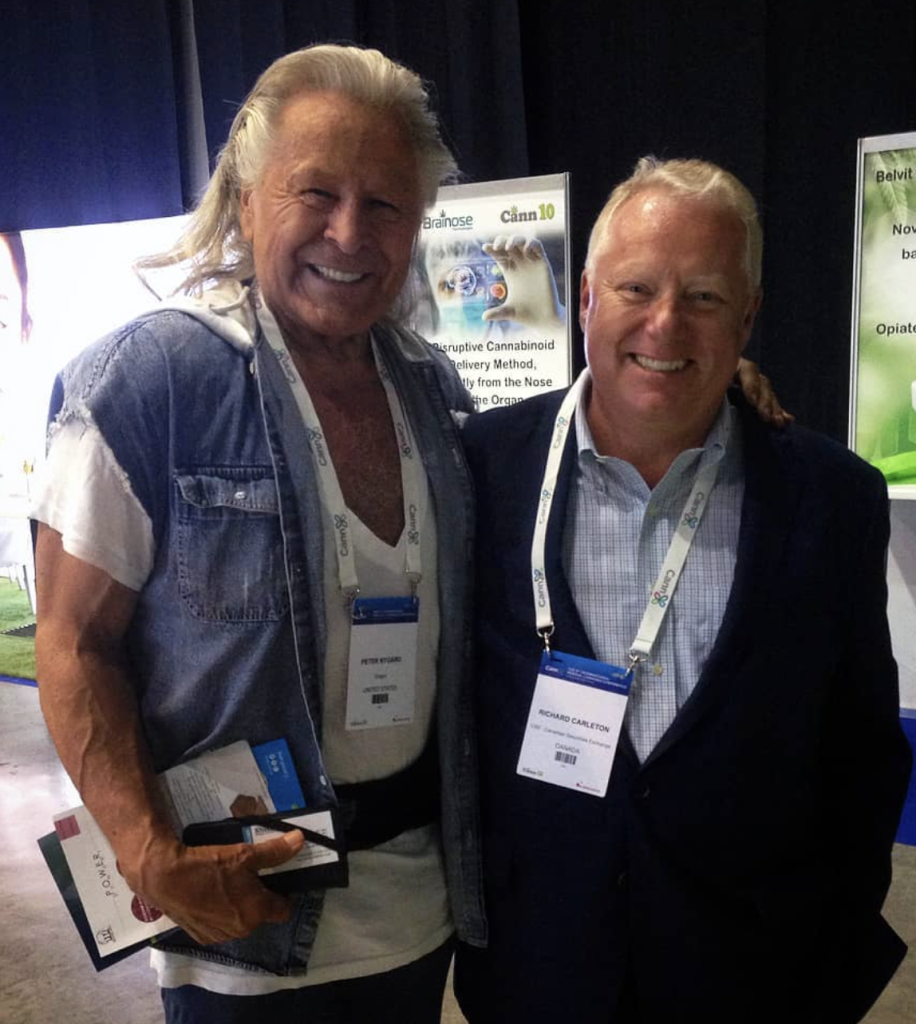
5. Association with Convicted Sex Trafficker Peter Nygard — Evidence of Character Unfitness
Richard Carleton’s association with Peter Nygard is direct evidence of a failure of character, judgment, and the basic standards of propriety required of the CEO of a recognized exchange. Peter Nygard is a convicted sex offender and accused sex trafficker, currently imprisoned in Canada and subject to extradition proceedings in the United States. Nygard’s conduct as a sexual predator was widely known within Canadian business and social circles for decades prior to his arrest.
Despite this, Richard Carleton publicly celebrated the association: the CSE’s official Instagram account features a photograph of Mr. Carleton with Peter Nygard. A person of sound judgment and genuine commitment to the ethical standards required of a market regulator does not publicly align themselves — on institutional social media — with an individual whose predatory conduct was openly discussed in shared circles. This reflects a failure of the basic moral judgment that fitness for regulatory office demands.
6. Repeated Violations of United States Immigration Law
Mr. Carleton and associated CSE executives, including Rob Cook and James Black, repeatedly entered the United States for the specific purpose of promoting investment in federally controlled substances — including marijuana, psychedelics, and other narcotics — while misrepresenting the purpose of their visits to immigration authorities. This pattern spans more than ten years. Under INA §212(a)(6)(C)(i), willful misrepresentation of a material fact to obtain US entry renders a foreign national inadmissible. The BCSC and OSC are requested to refer this matter to US Customs and Border Protection and the Department of Homeland Security for independent review.
IV. PATTERN OF INSTITUTIONAL CONDUCT
The individual allegations above do not stand in isolation. As the formal submissions before the Capital Markets Tribunal concluded: the concerns “cannot be divorced from the broader institutional context” of an exchange exhibiting a pattern of opacity, delay, retroactive justification, conflicts of interest, and retaliation. Taken together:
• A VP Regulation with no legal training, no capital markets qualifications, and thirty years as a motorcycle instructor was appointed to and retained in a quasi-judicial role
• A Chief Legal Officer was deliberately recruited for her OSC connections to provide regulatory insulation
• Three senior officials co-authored and co-signed a regulatory instrument that forensic evidence and Tribunal submissions establish was fabricated
• Evidence was withheld for 15 months, then supplemented with post-hoc material
• When fabrication was exposed, a coordinated legal cover-up was directed by the CLO
• Regulatory decision-makers held undisclosed personal relationships with the complainants whose interests the decision served
• A sanctioned securities fraudster continues to operate on the exchange without restriction while a market participant with no regulatory findings against him was banned and his company’s trading suspended
• The CEO publicly associates with a convicted sex trafficker
• A decade-long pattern of misrepresentation to US immigration authorities has been maintained
• The exchange’s own former General Counsel has filed civil proceedings alleging fraud, cover-up, and abusive conduct
This is not a series of isolated errors. It is a pattern of conduct by an institution that has systematically placed unqualified, conflicted, and strategically connected individuals into positions of regulatory authority — and then used those positions to advance private interests, suppress legitimate market activity, and insulate itself from oversight.
V. MARKET IMPACT
The conduct described above has directly resulted in:
• The suspension of trading in CSE: NEWS
• Losses exceeding $5 million
• Harm to approximately 4,000 retail investors
• Destruction of shareholder liquidity with no legitimate regulatory basis
As counsel formally submitted to the Tribunal: “Over four thousand investors have suffered avoidable harm due to the CSE’s opaque and heavy-handed approach.” A core function of the CSE is to protect investors from unfair or fraudulent practice. The Listing Committee’s decision had, as formally submitted, “quite the opposite effect, causing disproportionate instability and harm to thousands of third-party investors.”
VI. SPECIFIC REQUESTS
The complainant respectfully requests that the BCSC and OSC:
1. Initiate a formal fitness and suitability review of Mark Faulkner, Rob Cook, Rob Theriault, Tracey Stern, and Richard Carleton under the applicable Recognition Order conditions.
2. Obtain and review the full record in Jack Marks v. CNSX Markets Inc. and Ontario Securities Commission, Capital Markets Tribunal File No. 2025-11, including the written submissions of Narwal Litigation LLP dated January 30, 2026, and all appendices including the PDF metadata screenshot.
3. Examine whether Mr. Faulkner’s qualifications were ever assessed against the fitness standard applicable to the VP Regulation role at the time of his appointment.
4. Examine the circumstances of Ms. Stern’s appointment, including whether her OSC connections were a material factor in her recruitment, and whether any communications between Ms. Stern and OSC staff relating to these matters were consistent with the arm’s-length oversight relationship the recognition framework requires.
5. Investigate the personal and professional relationships between Faulkner, Cook, George Tsiolis, and Chris Parry, and assess whether those relationships disqualified Faulkner and Cook from participating in the suitability proceedings against Jack Marks.
6. Review the CSE’s treatment of George Tsiolis — a person formally sanctioned by the Capital Markets Tribunal for creating over 600 fictitious accounts to manipulate investor perception — in comparison to its treatment of Jack Marks, and assess whether selective and discriminatory enforcement occurred.
7. Direct the CSE to immediately preserve all records relating to the suitability determination concerning Jack Marks and the trading suspension of CSE: NEWS, including all drafts, metadata, internal communications, and communications with external counsel (including Norton Rose).
8. Commission or direct independent digital forensic analysis of the Decision Memo purportedly dated January 8, 2024, including full metadata examination, authorship analysis, and examination of all versions and signatories.
9. Consider whether interim measures are warranted — including immediate suspension of Faulkner, Cook, and Theriault from all regulatory functions, suspension of Ms. Stern from the CLO role, and review of Mr. Carleton’s continued tenure — pending the outcome of any investigation.
10. Refer the matter of repeated potential US immigration law violations to US Customs and Border Protection and the Department of Homeland Security.
11. Coordinate with the Royal Canadian Mounted Police, given the potential criminal dimensions of the alleged fabrication, co-signing of a forged regulatory instrument by three senior officials, and coordinated cover-up directed by the Chief Legal Officer.
VII. CONCLUSION
The evidence presented — including forensic metadata establishing that the central regulatory instrument was created a year after its stated date, a 15-month disclosure failure formally documented before the Capital Markets Tribunal, the personal relationships between regulatory decision-makers and the complainants who triggered the proceeding, and the coordinated legal strategy to conceal the fraud when exposed — raises credible, specific, formally documented, and in several respects legally adjudicated questions about whether Mark Faulkner, Rob Cook, Rob Theriault, Tracey Stern, and Richard Carleton satisfy the fitness and propriety standard that the Recognition Orders require.
An individual with no legal training, no capital markets qualifications, and thirty years as a motorcycle instructor has been entrusted with quasi-judicial authority over Canada’s public markets. He co-signed a fabricated document alongside a colleague personally connected to the complainant who profited from the outcome. Their Chief Legal Officer — recruited for her OSC connections — directed the legal strategy to conceal the fraud. The CEO who assembled this team publicly associates with a convicted sex trafficker and has presided over a decade-long pattern of misrepresentation to US immigration authorities.
What this submission describes is not a collection of isolated misjudgments. It is a deliberate institutional architecture — unqualified personnel, strategic connections, conflicts of interest, fabricated instruments, and coordinated cover-up — designed to exercise regulatory power without regulatory accountability.
The BCSC and OSC are the appropriate and empowered bodies to dismantle that architecture. The complainant urges prompt action in the interest of investor protection and the integrity of Canadian capital markets.
Submitted by Jack Marks]
Date: March 19, 2026
Contact: JM@WallStreetReporter.com (212)-871-2057 ext 7
More FRAUD & CORRUPTION by Mark Faulkner Canadian Securities Exchange exposed:
https://www.wallstreetreporter.com/2026/03/06/mark-faulkner-fraudster-canadian-securities-exchange/